Trusted by Europe's leading organizations







DNA Solutions builds and maintains the systems operators run their business on: toll backends, cross-border road charging, billing and the analytics that sit on top. We work on infrastructure where an hour of downtime hits revenue directly.
Trusted by Europe's leading organizations
DNA Solutions has spent years alongside operators like Satellic, Toll4Europe, T-Systems Road Charging and R-Pass Alsace, on long-running engagements. That taught us how these systems run day to day: where the data comes from, and what breaks when a gantry, a GPS feed or a nightly reconciliation fails.
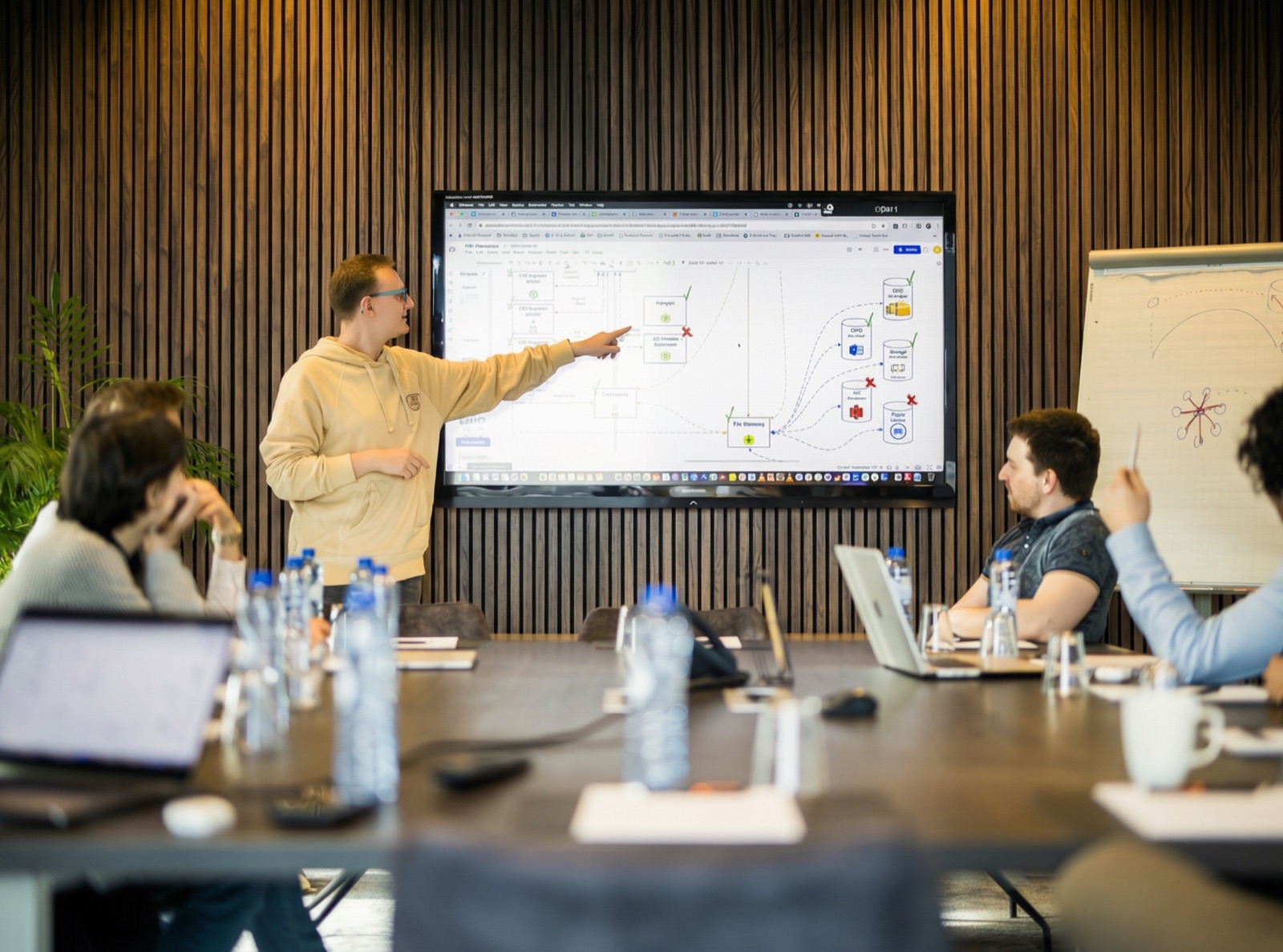
We design technology that lands on your bottom line. European enterprises trust us with extreme data volumes and critical financial pipelines.
See client resultsA Deloitte-audited billing platform we built and maintain, processing €300M in audited transactions every month.
By optimizing software licensing fees for a major European organization, DNA Solutions delivered over €1M in yearly cost savings.
A senior team of engineers and consultants across Europe.
T-Systems, Satellic, European Commission: our longest engagements last because we deliver.
A toll charge starts as a gantry passage or a GPS point and has to end as an audited line on an invoice. Keeping that chain exact is what DNA Solutions engineers here.
GPS positions and gantry passages have to turn into charges that add up to the cent. We build the calculation logic on strict decimal types and immutable event ledgers, so millions of events aggregate without a single rounding discrepancy. Each charge traces back to the event that created it, which lets operators pass external financial audits without reconstructing data after the fact.
The system has to feed the operator's general ledger correctly. We build reconciliation pipelines that connect the back-office to SAP, AFAS or a custom ERP, automating the daily financial close and taking manual entry out of the loop. The integration layers carry fallback mechanisms, dead-letter queues and automatic retry, so a temporary outage on the ERP side never loses a financial record.
One vehicle journey can cross several countries, each with its own tax, settlement and interoperability rules. We keep tax and settlement as decoupled, time-windowed configuration rather than hard-coded logic, so a rate change applies from its effective date without rewriting historical charges.
Operators sit on data spread across gantries, GPS feeds, billing and the back-office. We consolidate those sources into one analytics layer, so traffic, revenue and reconciliation can be read across the whole network instead of one system at a time. Every figure is reconciled against its source, so operations and finance work from the same numbers.
Three areas cover most toll engagements: the back office that records and invoices passages, cross-border pricing, and the analytics that read across the network.
What we buildThe systems that record passages, price them, invoice and reconcile to the cent, with the SAP, AFAS or custom-ERP integration that ties the back office to finance.
Pricing engines evaluate gantry and GPS events as they arrive and apply each country's tax and settlement rules as time-windowed configuration, so a peak in telemetry never slows the platform.
Data unified from gantries, GPS feeds, billing and the back-office into one analytics layer. Traffic, revenue and reconciliation read across the whole network, each figure traceable to its source.
Toll operators rarely need just one of these. The three below come up in most engagements, each with a page of its own.
Toll backends, calculation logic and cross-border charging, built and maintained for operators across several European countries.
The rating and invoicing core behind billing: high-volume event pricing, immutable ledgers and reconciliation to the cent that holds up to audit.
Connecting the back-office to SAP, AFAS or a custom ERP, with reconciliation pipelines that close the books daily without manual entry.
A few projects we've built and maintained for European toll and road operators.
Operational data unified from many sources into one analytics layer, so traffic and revenue read across the whole network. [à confirmer]
Unified toll analytics
An automated pipeline that keeps the operations system and the corporate financial ledger in sync, with daily closing instead of manual reconciliation.
Zero manual reconciliation
A microservices architecture we built that rates GPS and gantry events into unified invoices, applying each country's tax and settlement rules.
Cross-border toll billing
A calculation service that prices a route from its road segments and vehicle class, returning the expected toll before a journey starts. [à confirmer]
Route-level toll pricingSenior decision-makers at the toll and road operators we work with.
"DNA Solutions built the backend and the app for our highway toll system. Of all the partners we evaluated, they were the best fit, both on the technical side and in how they worked with our team."

"DNA works with us to deliver digital systems at scale so that we can serve our customers digitally. They are both reactive to requests and proactive with ideas and proposals."

"I appreciated the collaborative spirit and the effort to deliver a reliable solution within a reasonable budget. The step-by-step approach with a demo before deployment made all the difference."

The points toll operators usually raise before they start.
The same vehicle journey can be subject to different tax, settlement and interoperability rules from one country to the next. We treat those rules as time-windowed configuration rather than hard-coded logic, so a rate or settlement change applies from its effective date without rewriting historical charges. EETS, where a single contract covers tolls across networks, sits on the same model: charges are computed per domain, then settled according to each domain's rules. It is the kind of multi-country work DNA Solutions runs across five European countries today.
Yes. Most operators already run a back-office, an ERP and a set of operational systems, and the point is to connect to them rather than replace them. We build reconciliation pipelines into SAP, AFAS or a custom ERP that automate the daily close and take manual entry out of the loop. The integration layers carry fallback queues and automatic retry, so a temporary outage on one side never loses a financial record. We usually start with one focused flow on your production data before any wider commitment.
We never run a big-bang cutover. The new platform runs in parallel with the old one, and reconciliation reports compare both outputs at every billing cycle. A segment of traffic only switches over once its charges match to the cent, so revenue and compliance are never at risk during the migration. You own the result: source code, database schemas, infrastructure-as-code and documentation, deployed on your own cloud account or on-premise, on an open-source stack with no proprietary licences locked in. Ongoing support stays optional.
Operators usually have data spread across gantries, GPS feeds, billing and the back-office, each readable on its own but hard to read together. We consolidate those sources into one analytics layer, so traffic, revenue and reconciliation can be read across the whole network instead of one system at a time. Every figure is reconciled against its source, so operations and finance work from the same numbers.